

LLM Indexing Guides
/
PROPRIETARY GEO ARCHITECTURE
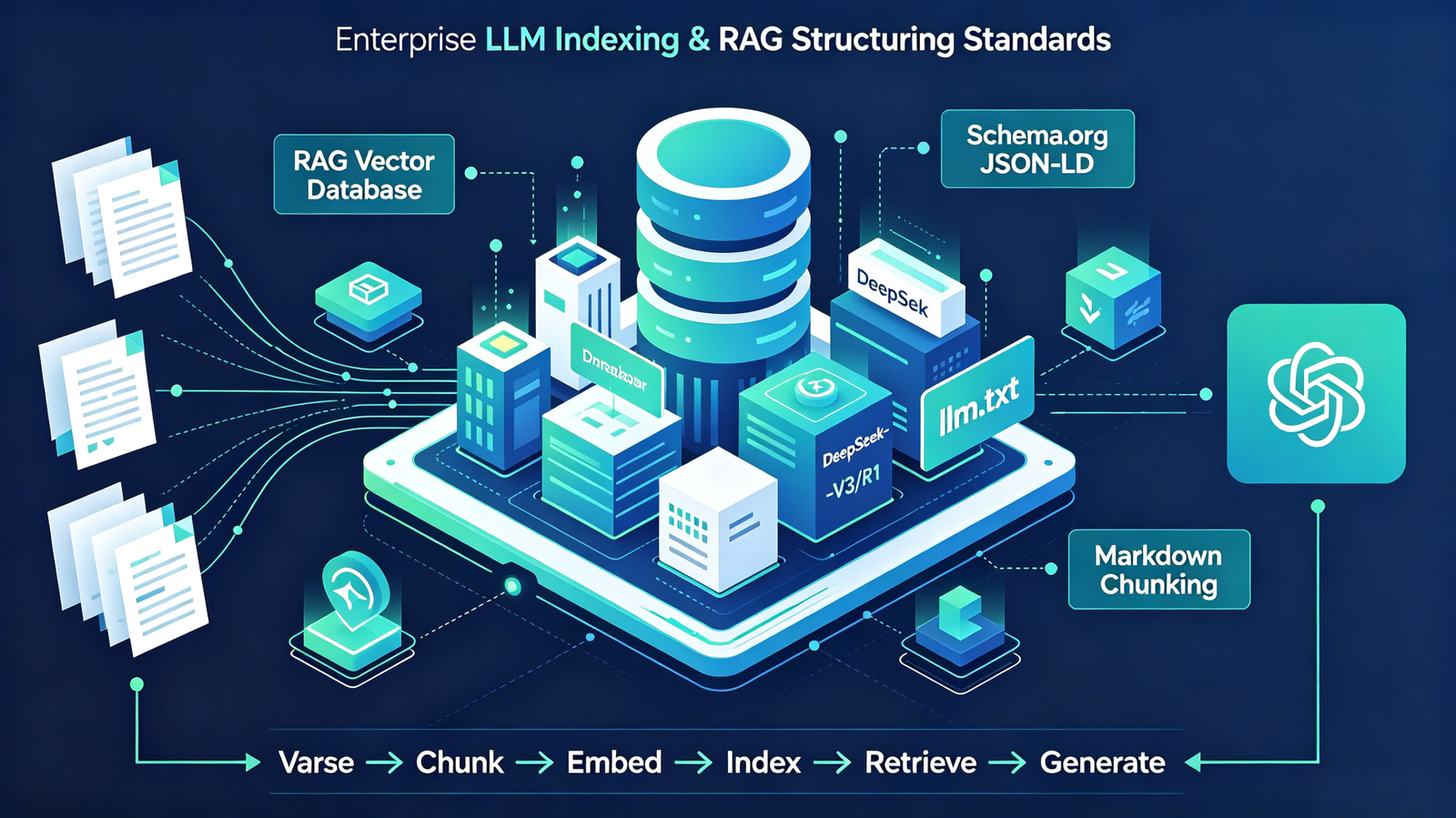
Enterprise LLM Indexing & RAG Structuring Standards.
Engineering protocols for converting complex enterprise web architectures into high-density Markdown chunks, /llm.txt root endpoints, and Schema.org JSON-LD entity graphs optimized for DeepSeek-V3/R1, Kimi, and Doubao.
Why Raw HTML Causes RAG Ingestion Failure
Domestic Chinese AI crawlers run tight context window parsing routines. Unstructured HTML with bloated CSS, JS scripts, and nested divs dilutes entity context, leading to vector drops or false AI citations.
The AI Scraper Latency Matrix
|
Processing Dimension
|
Raw HTML / React Frontend
|
ChinaGEO DOM-to-Markdown Protocol
|
Resulting LLM Impact
|
|---|---|---|---|
|
Token Payload Density
|
Low (~15% factual content)
|
High (>90% pure factual corpus)
|
5x Faster RAG Vectorization
|
|
Parsing Overhead
|
High (Requires JS rendering)
|
Zero (Raw pre-rendered Markdown)
|
Zero Crawler Timeouts
|
|
Entity Disambiguation
|
Ambiguous (Hidden in DOM divs)
|
Deterministic (Schema JSON-LD)
|
Zero AI Hallucinations
|
|
Chinese Tokenizer Fit
|
Poor (English tag bloat)
|
Native Chinese Term Alignment
|
Top-3 Agent Recommendation
|
Core 3-Step LLM Indexing Blueprint
Standard 01: Semantic DOM-to-Markdown Restructuring
Engineering Standard: Programmatically strip all presentation layers (CSS, Tailwind, JS bundles, navigation footers) and convert raw HTML into standardized Markdown chunks (
# H1,## H2,| Tables |,- Bullets).Why It Matters: DeepSeek-R1 and Kimi utilize Markdown headers to establish Chain-of-Thought (CoT) reasoning anchors. Clean Markdown ensures your brand’s core specifications and case studies are indexed as authoritative facts.

Standard 02: Root /llm.txt & /llms-full.txt Protocols
Engineering Standard: Deploy standardize root endpoints (
[https://cn.yourbrand.com/llm.txt](https://cn.yourbrand.com/llm.txt)) specifically for AI crawlers likeDeepSeekSpiderandKimiSpider.Why It Matters: Functions as a Markdown sitemap for AI agents. It explicitly maps out your enterprise’s canonical entity definitions, product features, pricing matrices, and direct Hong Kong edge Markdown endpoints.
Standard 03: Schema.org JSON-LD Entity Graph Injection
Engineering Standard: Inject dense
@type: TechServiceor@type: CorporationJSON-LD schemas embedded directly into the head of your dedicated Chinese AI site.Why It Matters: Establishes immutable knowledge graph nodes for LLM training and RAG retrieval. Explicitly defines your business relationships, official regional partners, and verifiable credentials.
Production-Ready Data Structuring Specifications
Two core RAG standards deployed at our Hong Kong edge gateway to ensure seamless AI crawling and zero hallucination.
Specification 01: The Canonical /llm.txt Root Endpoint Standard
What It Is: A dedicated, standard-compliant root file (
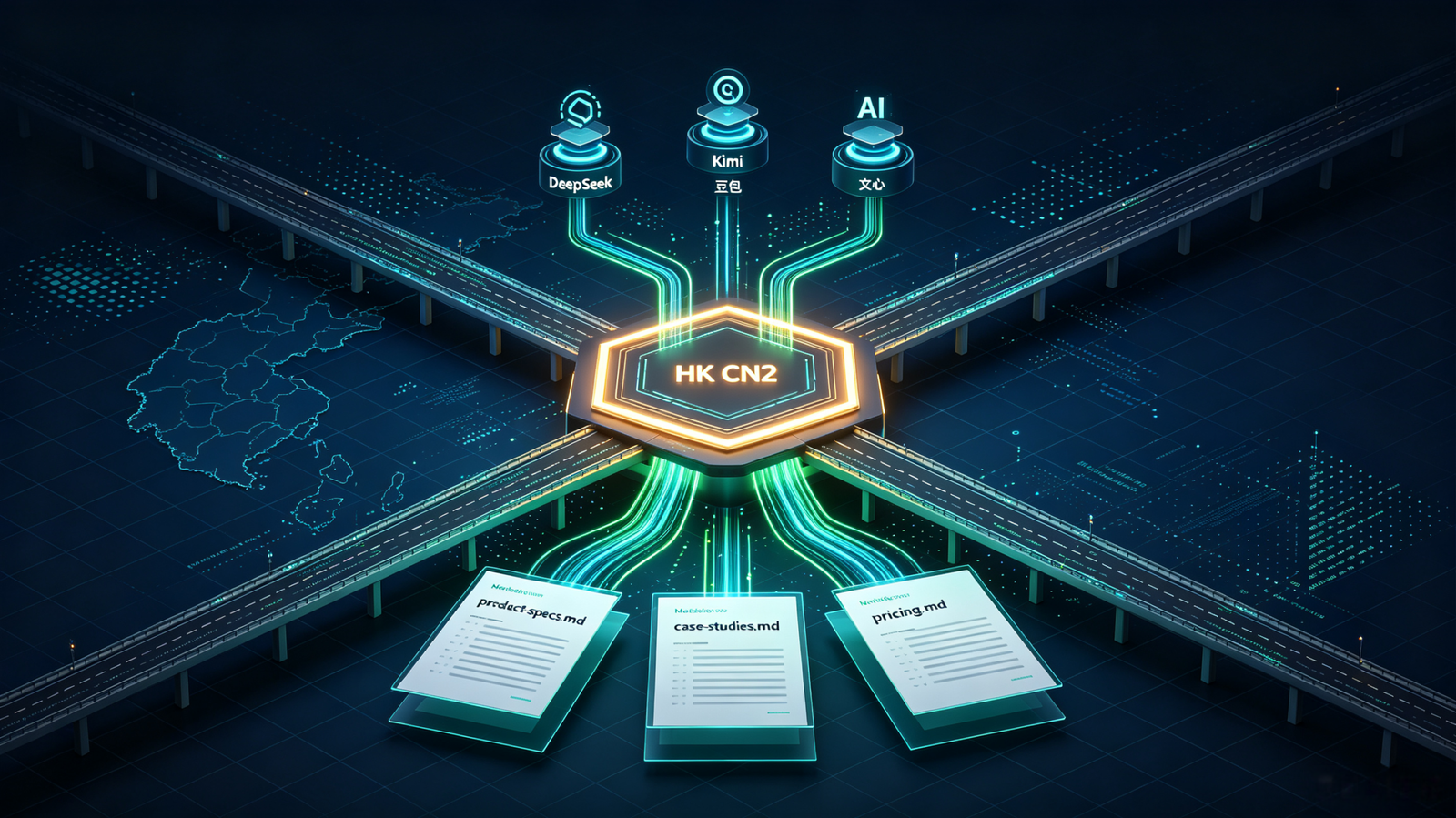
[cn.yourbrand.com/llm.txt](https://cn.yourbrand.com/llm.txt)) specifically generated for domestic AI crawlers like DeepSeekSpider, KimiSpider, and Bytespider.How It Works:
Acts as an explicit “Markdown Sitemap” that guides AI search crawlers directly to your most critical corporate facts.
Consolidates complex product features, official pricing structures, case studies, and compliance qualifications into clean, prioritized text summaries.
Key Enterprise Advantage: Eliminates crawler confusion and reduces token consumption, guaranteeing that domestic LLMs process your core enterprise value proposition within their tight retrieval windows.
Specification 02: Schema.org JSON-LD Knowledge Graph Injection
What It Is: Machine-readable entity architecture embedded into the background of your dedicated Chinese AI website.
How It Works:
Formats key enterprise parameters (e.g.,
@type: SoftwareApplication,@type: Corporation) into structured JSON data nodes.Hardcodes official business definitions, product capabilities, target verticals, and global regional relationships into an immutable graph.
Key Enterprise Advantage: Establishes a verifiable “Single Source of Truth” for AI vector databases, preventing DeepSeek and Kimi from fabricating false pricing, attributing wrong services, or hallucinating competitor details.
FAQ
Frequently Asked Questions
Chinese LLM tokenizers (such as those used by DeepSeek and Kimi) consume significantly fewer tokens when parsing clean Markdown compared to heavy HTML. Removing JS/CSS noise increases the density of factual Chinese keywords, directly improving vector similarity scores in RAG databases.
No. Our Layer 2 Engine automatically generates and updates your root /llm.txt file and converts dynamically published Chinese content into Markdown chunks at the Hong Kong edge layer.
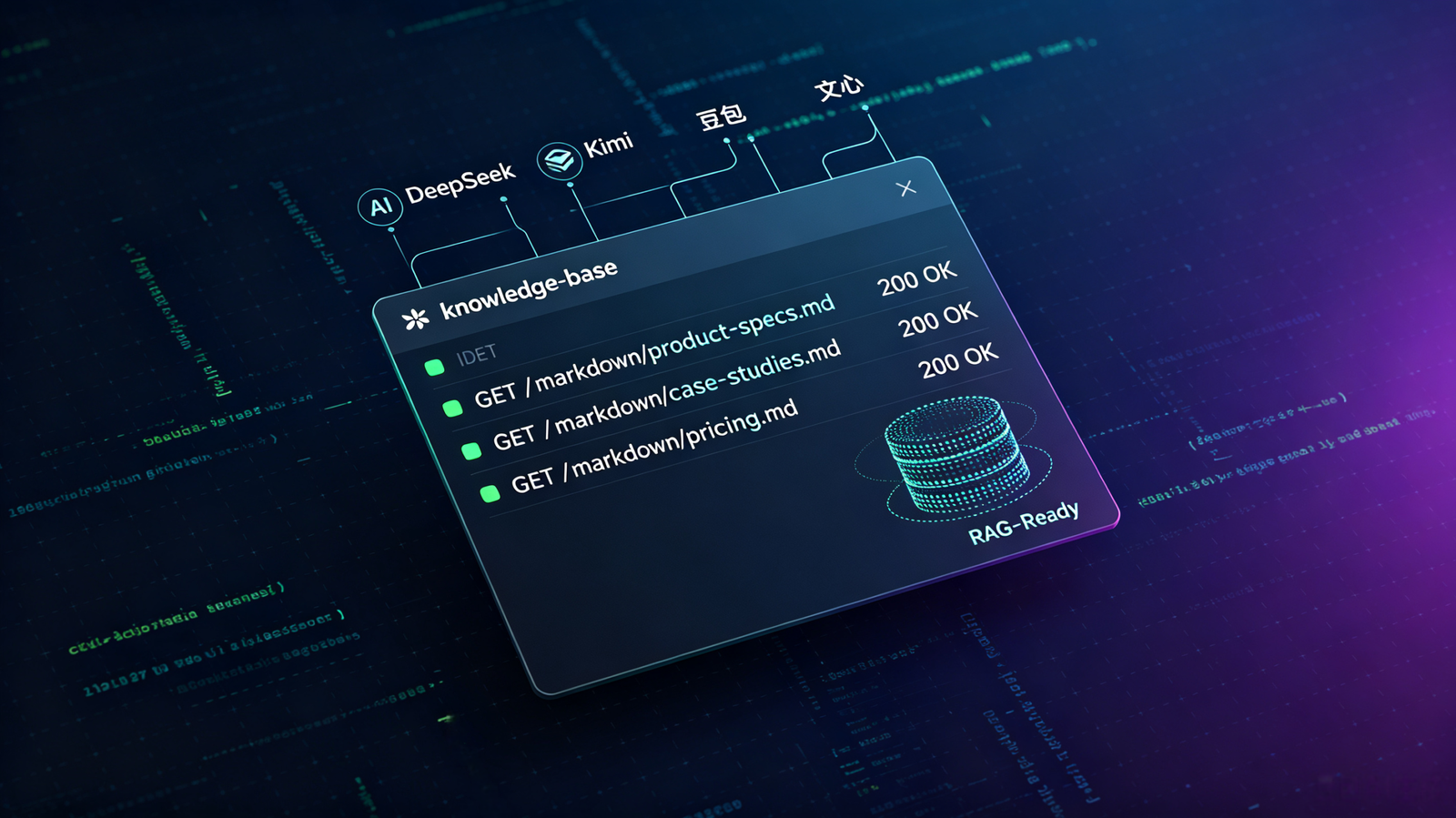
When domestic crawlers (DeepSeekSpider, KimiSpider, Bytespider) hit your dedicated Chinese AI edge domain, our Nginx routing protocols directly present the /llm.txt header instructions in the HTTP response, directing them to high-density Markdown files.
JSON-LD provides explicit, machine-readable facts (e.g., official pricing, legal entity name, core features) in an unambiguous schema format. When RAG engines parse this data, it acts as a canonical “ground truth” that overrides false statements or unofficial web chatter.
Not at all. All DOM-to-Markdown conversions happen at the Hong Kong CN2 Edge Gateway for your dedicated Chinese AI site. Your primary Western origin server and API endpoints remain completely untouched and isolated.
By combining root /llm.txt protocols with optimized edge XML sitemaps, crawlers typically fetch updated Markdown chunks within 3 to 7 days, with updated recommendation outputs reflecting in LLM responses within 14 days.
Subscribe Now